สินค้าและโซลูชัน ตารางราคาสินค้า ตารางเปรียบเทียบสเปคสินค้า ข้อมูลและเทคนิค แกลเลอรี่ภาพเนื้อหา ผลงานติดตั้ง ดาวน์โหลด เมนูทั้งหมด (เวปเก่า) ติดต่อเรา

Chiaki Hidaka Jav Link Official

สแกนหน้า,นิ้ว,บัตร | ฟรี Notify แจ้งเข้ามือถือ | ประกัน 2 ปี พร้อมหลังการขาย | มีทั้ง On Cloud และ Local ใช้งานง่าย

ติดตั้งแล้วกว่า 1000+ โครงการ
ฟรีระบบ Notify ส่งเข้ามือถือ
รับประกัน 2 ปี
อบรม/Remote Support

สินค้าและโซลูชันตามธุรกิจ

ระบบที่เหมาะสมกับแต่ละประเภทธุรกิจ การจัดการเวลาทำงานและการเข้าออก

มีเครื่องสแกนอยู่แล้ว

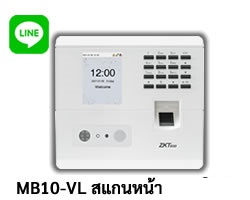
K50 ZKTeco แจ้งเตือนเข้ามือถือ MB10-VL EFACE10 ZKTeco แจ้งเตือนเข้ามือถือ

ต้องการใช้ระบบ Notify แจ้งเข้ามือถือ พร้อมสรุปเวลา

LINE สอบถามรายละเอียด

ร้านค้า ออฟฟิศทั่วไป

K60 ZKTeco แจ้งเตือนเข้ามือถือ MB10-VL MB40-VL ZKTeco แจ้งเตือนเข้ามือถือ

ลงเวลาพนักงาน แจ้งเข้ามือถือ คำนวณสรุปเวลาเป็นรายงาน

ดูรายละเอียดโซลูชัน

บริษัท / สาขา

K60 ZKTeco แจ้งเตือนเข้ามือถือ MB10-VL U300-C ZKTeco แจ้งเตือนเข้ามือถือ

บันทึกเวลาพนักงาน ดึงข้อมูลข้ามสาขา ทำรายงานสรุป ติดตั้งง่าย

ดูรายละเอียดโซลูชัน

โรงงาน

SenseFace 4A ZKTeco แจ้งเตือนเข้ามือถือ MB40-VL TurnStile ZKTeco แจ้งเตือนเข้ามือถือ

รองรับพนักงานจำนวนมาก สรุปเวลา หรือส่งข้อมูลไปใช้ร่วมกับ Payroll

ดูรายละเอียดโซลูชัน

Chiaki Hidaka Jav Link Official

For decades, the global cultural lexicon has been increasingly colored by words like tsundere , isekai , and J-Pop . While "Hollywood" has long been the default capital of entertainment, a seismic shift has occurred over the past thirty years. The Japanese entertainment industry has evolved from a niche exporter of animation to a dominant, trend-setting global superpower.

The industry relies heavily on Geinin (comedians/talents) rather than actors. Agencies like Yoshimoto Kogyo control thousands of comedians who fill airtime, bridging the gap between theater (Manzai comedy) and modern streaming. To succeed in Japan, content must adhere to three unspoken rules: Kawaii , Giri , and Mono no Aware . The Aesthetics of Cute Kawaii is a weapon. From the mascot of a local police station to the UI of a smartphone game, cuteness lowers hostility and drives commerce. The entertainment industry weaponizes this through character licensing—Hello Kitty is not just a toy; she is a brand ambassador worth $80 billion. The Narrative of Obligation (Giri) Western stories often prioritize individual freedom ("Save yourself"). Japanese narratives prioritize social debt. In Jujutsu Kaisen , characters die for the sake of a promise. In Final Fantasy , the antagonist often has a tragic duty. This resonates deeply in a collectivist society and exports a specific flavor of melancholy that Western writers struggle to replicate. Mono no Aware (The Pathos of Things) This is the awareness of impermanence. Cherry blossoms fall; heroes die mid-arc. Japanese entertainment rarely offers the "Happily Ever After" of Disney. Instead, it offers Yasuragi (peaceful resignation). This is why a movie like Your Name is devastatingly sad and uplifting simultaneously. The "Otaku" Economy: From Subculture to Mainstream Thirty years ago, Otaku (anime geeks) were social pariahs. Today, they are the economic engine. The Akihabara district in Tokyo is ground zero, where "waifu culture" and high-end figurine collecting coexist. chiaki hidaka jav link

To understand Japanese entertainment is to understand a paradox: an industry that is simultaneously hyper-traditional (rooted in Kabuki and tea ceremonies) and hyper-futuristic (driven by VTubers and AI-generated idols). This article explores the machinery, the cultural nuances, and the global footprint of Japan’s sprawling entertainment ecosystem. The Japanese entertainment landscape is not monolithic. It is a federation of distinct sectors, each with its own rules, aesthetics, and economics. 1. Anime: The Flagship Export Anime is no longer a genre; it is a global distribution system. In 2023, the anime industry’s market value surpassed 3 trillion yen (approximately $20 billion USD). Shows like Demon Slayer and Jujutsu Kaisen routinely outsell Marvel movies in box office revenue per theater. For decades, the global cultural lexicon has been

What sets anime apart is the . Unlike Western studios where a single streamer or studio takes the financial risk, Japanese anime is funded by a consortium of companies—publishers (Kodansha, Shueisha), music labels (Sony, King Records), and toy manufacturers (Bandai). This de-risks production but leads to a notorious downside: low wages for animators. The "sweatshop" reality behind beautiful frames remains the industry's dirty secret. 2. J-Pop and the Idol Culture J-Pop is distinct from K-Pop in one crucial way: accessibility vs. perfection . While K-Pop focuses on global-ready, flawless choreography, J-Pop maintains a "raw" aesthetic. However, the crown jewel of Japanese music is the Idol . The Aesthetics of Cute Kawaii is a weapon

From the male-dominated Johnny & Associates (now Smile-Up) to the female juggernaut AKB48, idols are not just singers; they are "unfinished" products. Fans buy CDs not just for the music, but for "handshake event tickets." The economic model is built on purchasable connection —a concept that baffles Western markets but generates billions in Japan. The recent rise of (Virtual YouTubers) like Hololive's Gawr Gura has taken the idol concept into the metaverse, selling out Tokyo Dome shows without a physical human on stage. 3. Terrestrial Television: The Unlikely King In the age of Netflix, Japanese broadcast TV (Fuji TV, TBS, Nippon TV) remains disturbingly powerful. Prime-time viewership for shows like Iwate no Uzuki still dominates morning conversation. The structure is unique: "Variety Shows" are the true rulers. These shows blend game shows, talk segments, and "documentary-style" stalking of celebrities.

As the world becomes more fragmented, the Japanese model of "otaku loyalty" and "media mix" consumption may become the global standard. Whether you watch Shogun on FX, play Genshin Impact , or listen to Ado, you are no longer a foreign observer. You are part of the Uchi-Soto (inside-outside) sphere of Japan’s cultural revolution. And the revolution is just getting started.

For the global audience, Japanese culture offers something that Western media has largely abandoned: . Anime characters scream their feelings. Idols cry on stage. Game protagonists sacrifice everything for a friend.
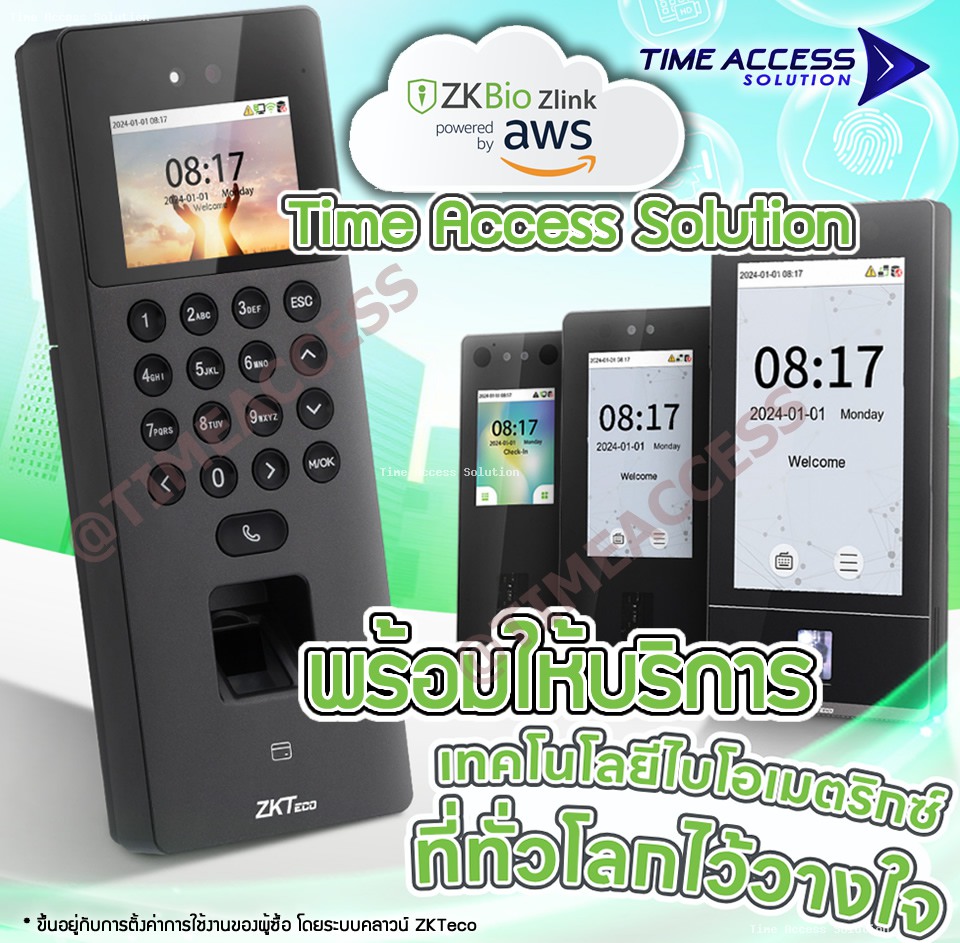

ZKBio Zlink เทคโนโลยีใบโอเมตริกซ์ ที่ทั่วโลกไว้วางใจ

ZKBio Zlink เทคโนโลยีใบโอเมตริกซ์ ที่ทั่วโลกไว้วางใจ

แพลตฟอร์มคลาวด์ All-in-One บน AWS สำหรับงาน บันทึกเวลา + ควบคุมการเข้า-ออก + การจัดการบุคลากรปลอดภัย มั่นใจ ขยายการใ...

ดูรายละเอียดโซลูชัน
SenseFace 4A โซลูชันระบบบันทึกเวลา สำหรับโรงงาน

SenseFace 4A โซลูชันระบบบันทึกเวลา สำหรับโรงงาน

ปัญหาที่โรงงานเจอเป็นประจำ พนักงานจำนวนมาก เข้างาน/ออกงานพร้อมกัน ทำให้เครื่องบางรุ่นสแกนไม่ทัน มีการพยายามทุจ...

ดูรายละเอียดโซลูชัน

สินค้าแนะนำ

เครื่องสแกนลายนิ้วมือและใบหน้าคุณภาพสูง พร้อมระบบแจ้งเตือนผ่านมือถือ

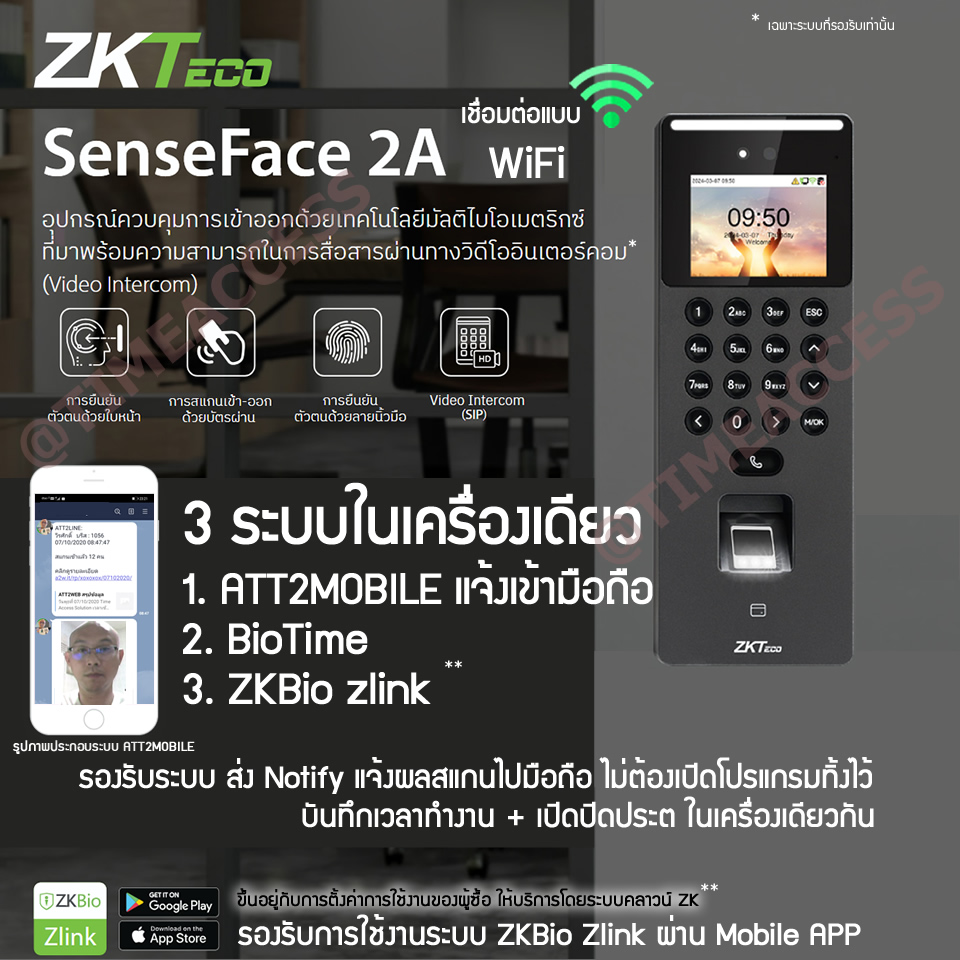
SenseFace 2A – เครื่องเดียวครบทั้งสแกนและควบคุมประตู

SenseFace 2A – เครื่องเดียวครบทั้งสแกนและควบคุมประตู

฿4,990
  • รุ่นสุดคุ้ม 1 รวมทุกระบบทุกฟังชั่น ลงเวลา เปิดปิดประตู
  • แจ้งเตือน Notify ไปมือถือด้วย ATT5 + (Telegram) ระบบเฉพาะจากเรา
  • สแกนใบหน้า ลายนิ้วมือ อ่านบัตร ID และรหัสผ่าน
  • เชื่อมต่อ WiFi / LAN / USB ใช้งานสะดวก
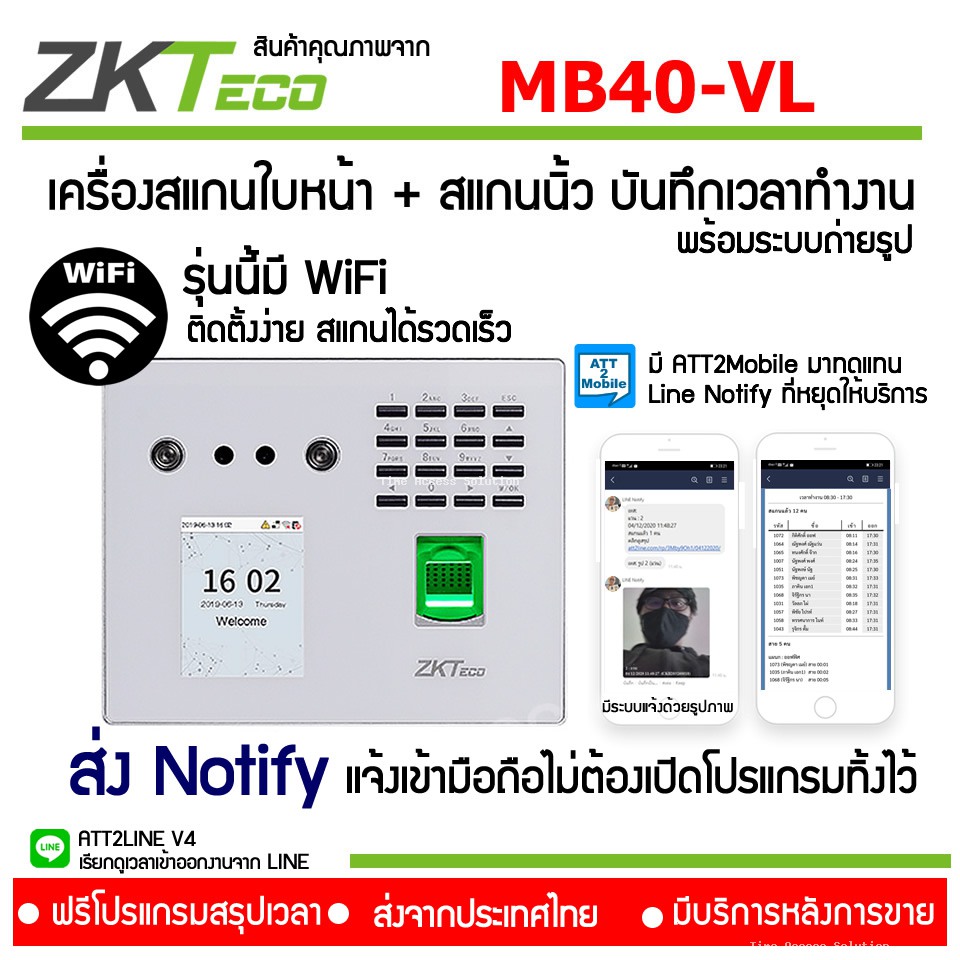
MB40-VL โซลูชันเครื่องบันทึกเวลาเข้าออกงานยุคใหม่มี Notify

MB40-VL โซลูชันเครื่องบันทึกเวลาเข้าออกงานยุคใหม่มี Notify

฿8,900
  • MB40-VL รองรับทุกระดับการใช้งาน
  • ส่งข้อความแจ้งไปมือถือ พร้อมรูปถ่าย
  • ความจุใบหน้า 3,000 / ลายนิ้วมือ 3,000
  • สแกนเร็วเพียง ≤1 วินาที เชื่อมต่อ LAN / WiFi / USB
TIP960 , K60-ID Notify Edition สแกนนิ้วลงเวลาแจ้งเข้ามือถือ

TIP960 , K60-ID Notify Edition สแกนนิ้วลงเวลาแจ้งเข้ามือถือ

฿4,990
  • รุ่นประหยัด สำหรับบริษัท ร้านค้า ทั่วไป
  • แจ้ง Notify เมื่อพนักงานสแกนไปมือถือ ผ่าน Telegram ไม่ต้องเปิดคอมทิ้งไว้
  • ดูข้อมูลสรุปประจำวัน คนมา คนสายในมือถือได้ ด้วย ATT2Mobile
  • รองรับลายนิ้วมือ + บัตร ID 125Khz
ดูโซลูชันและสินค้าทั้งหมด

"สามารถแจ้งให้รีโมทสอนการใช้งานได้ง่าย และเข้าใจดีค่ะ"

MB40-LV เครื่องสแกนใบหน้า

มี wifi ถ่ายรูปแจ้ง notify เข้ามือถือ

TIP800 PLUS, THAI01

มีแบตสำรองไฟ ส่งข้อความ notify เข้ามือถือ

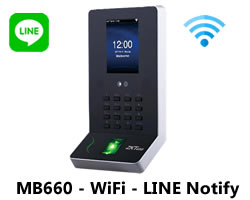
MB660 สแกนใบหน้าราคาประหยัด

สแกนหน้าระยะสั้น ส่ง notify มี wifi

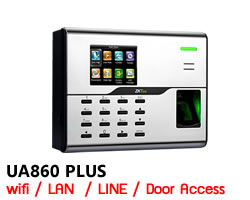
UA860 สแกนนิ้วบันทึกเวลา

สแกนนิ้ว มี wifi ติดตั้งง่าย notify เข้ามือถือ

TA-S1 Tunstile

ตู้สามขา TurnStile + สแกนหน้า

F18 สแกนนิ้วลงเวลา เปิดประตู

รสแกนนิ้ว ลงเวลา เปิดประตู ยอดนิยม

สแกนหน้า รุ่นประหยัด ส่ง notify เข้ามือถือ

ประตู interlock

Door interlock ทั้งระบบ พร้อมติดตั้ง

For decades, the global cultural lexicon has been increasingly colored by words like tsundere , isekai , and J-Pop . While "Hollywood" has long been the default capital of entertainment, a seismic shift has occurred over the past thirty years. The Japanese entertainment industry has evolved from a niche exporter of animation to a dominant, trend-setting global superpower.

The industry relies heavily on Geinin (comedians/talents) rather than actors. Agencies like Yoshimoto Kogyo control thousands of comedians who fill airtime, bridging the gap between theater (Manzai comedy) and modern streaming. To succeed in Japan, content must adhere to three unspoken rules: Kawaii , Giri , and Mono no Aware . The Aesthetics of Cute Kawaii is a weapon. From the mascot of a local police station to the UI of a smartphone game, cuteness lowers hostility and drives commerce. The entertainment industry weaponizes this through character licensing—Hello Kitty is not just a toy; she is a brand ambassador worth $80 billion. The Narrative of Obligation (Giri) Western stories often prioritize individual freedom ("Save yourself"). Japanese narratives prioritize social debt. In Jujutsu Kaisen , characters die for the sake of a promise. In Final Fantasy , the antagonist often has a tragic duty. This resonates deeply in a collectivist society and exports a specific flavor of melancholy that Western writers struggle to replicate. Mono no Aware (The Pathos of Things) This is the awareness of impermanence. Cherry blossoms fall; heroes die mid-arc. Japanese entertainment rarely offers the "Happily Ever After" of Disney. Instead, it offers Yasuragi (peaceful resignation). This is why a movie like Your Name is devastatingly sad and uplifting simultaneously. The "Otaku" Economy: From Subculture to Mainstream Thirty years ago, Otaku (anime geeks) were social pariahs. Today, they are the economic engine. The Akihabara district in Tokyo is ground zero, where "waifu culture" and high-end figurine collecting coexist.

To understand Japanese entertainment is to understand a paradox: an industry that is simultaneously hyper-traditional (rooted in Kabuki and tea ceremonies) and hyper-futuristic (driven by VTubers and AI-generated idols). This article explores the machinery, the cultural nuances, and the global footprint of Japan’s sprawling entertainment ecosystem. The Japanese entertainment landscape is not monolithic. It is a federation of distinct sectors, each with its own rules, aesthetics, and economics. 1. Anime: The Flagship Export Anime is no longer a genre; it is a global distribution system. In 2023, the anime industry’s market value surpassed 3 trillion yen (approximately $20 billion USD). Shows like Demon Slayer and Jujutsu Kaisen routinely outsell Marvel movies in box office revenue per theater.

What sets anime apart is the . Unlike Western studios where a single streamer or studio takes the financial risk, Japanese anime is funded by a consortium of companies—publishers (Kodansha, Shueisha), music labels (Sony, King Records), and toy manufacturers (Bandai). This de-risks production but leads to a notorious downside: low wages for animators. The "sweatshop" reality behind beautiful frames remains the industry's dirty secret. 2. J-Pop and the Idol Culture J-Pop is distinct from K-Pop in one crucial way: accessibility vs. perfection . While K-Pop focuses on global-ready, flawless choreography, J-Pop maintains a "raw" aesthetic. However, the crown jewel of Japanese music is the Idol .

From the male-dominated Johnny & Associates (now Smile-Up) to the female juggernaut AKB48, idols are not just singers; they are "unfinished" products. Fans buy CDs not just for the music, but for "handshake event tickets." The economic model is built on purchasable connection —a concept that baffles Western markets but generates billions in Japan. The recent rise of (Virtual YouTubers) like Hololive's Gawr Gura has taken the idol concept into the metaverse, selling out Tokyo Dome shows without a physical human on stage. 3. Terrestrial Television: The Unlikely King In the age of Netflix, Japanese broadcast TV (Fuji TV, TBS, Nippon TV) remains disturbingly powerful. Prime-time viewership for shows like Iwate no Uzuki still dominates morning conversation. The structure is unique: "Variety Shows" are the true rulers. These shows blend game shows, talk segments, and "documentary-style" stalking of celebrities.

As the world becomes more fragmented, the Japanese model of "otaku loyalty" and "media mix" consumption may become the global standard. Whether you watch Shogun on FX, play Genshin Impact , or listen to Ado, you are no longer a foreign observer. You are part of the Uchi-Soto (inside-outside) sphere of Japan’s cultural revolution. And the revolution is just getting started.

For the global audience, Japanese culture offers something that Western media has largely abandoned: . Anime characters scream their feelings. Idols cry on stage. Game protagonists sacrifice everything for a friend.
เทคนิค - Support

คำแนะนำและเทคนิคการใช้งาน

วิธีการใช้งานโปรแกรม AnyDesk (สำหรับรับการบริการ)

วิธีการใช้งานโปรแกรม AnyDesk (สำหรับการบริการ) โปรแกรม AnyDesk เป็นเครื่องมือที่ช่วยให้คุณสามารถ &l...

อ่านเพิ่มเติม

ตัวอย่าง การจัดเก็บและลงทะเบียนใบหน้า บนเครื่องสแกนใบหน้า

สำหรับผู้ที่มีข้อสงสัย ว่าเครื่องสแกนใบหน้าทำงานอย่างไร จัดเก็บและลงทะเบียนแบบใด วีดีโอนี้เป็นตัวอย่...

อ่านเพิ่มเติม

การเพิ่มผู้ใช้และเก็บลายนิ้วมือพร้อมตั้งสิทธิ์ผู้ดูแลในเครื่องสแกนรุ่น LX16 LX17 LX50

ขั้นตอนการเพิ่มผู้ใช้และเก็บลายนิ้วมือในเครื่องสแกน LX16 LX17 LX50 เข้าสู่เมนู กดปุ่ม M (M...

อ่านเพิ่มเติม

การติดตั้ง โปรแกรม TAS Time Attendance System , ATT5 , ZKTime

การติดตั้ง โปรแกรม TAS Time Attendance System , ATT5 , ZKTime ดาวน์โหลดโปรแกรมจากเว็บไซต์ ...

อ่านเพิ่มเติม

เครื่องสแกนลายนิ้วมือรุ่นประหยัด 2 รุ่นจาก ไทม์ แอคเซส โซลูชั่น

ทำไมต้องเลือกเครื่องสแกนนิ้วรุ่นประหยัด ? ทุกวันนี้ เครื่องสแกนลายนิ้วมือและใบหน้ามีหลายรุ่น หลายยี...

อ่านเพิ่มเติม

การใช้งานโปรแกรมและเมนูต่าง ๆ และหน้าที่ ต่างๆ ภายในโปรแกรม ATT5 (ZKTime 5.0)

เมนูที่เกี่ยวข้องในการใช้งานโปรแกรม ATT5 (ZKTime 5.0) ผู้ใช้งานสามารถเปิดโปรแกรมได้จาก ไอคอนของ TAS...

อ่านเพิ่มเติม
ดูทั้งหมด

ขอใบเสนอราคา

กรอกข้อมูลเพื่อรับใบเสนอราคาที่เหมาะสมกับธุรกิจของคุณ

คำถามที่พบบ่อย

คำตอบสำหรับคำถามที่ลูกค้าสอบถามบ่อย