Debug-action-cache

Well done is better than well said.

Debug-action-cache

[debug] Resolved path: 'node_modules' -> '/home/runner/work/app/node_modules' [debug] Path exists: true [debug] Contents: [ 'react', 'lodash', '.bin' ] If you see Path exists: false , you know your working directory is wrong. Add working-directory: ./app to your step. You run a Windows runner and a Linux runner. They share the same cache key. Debug logs reveal:

"total_count": 1, "actions_caches": [ "id": 123456, "key": "Linux-node-abc123", "size_in_bytes": 245000000, "created_at": "2025-04-01T10:00:00Z", "last_accessed_at": "2025-04-02T10:00:00Z" ] debug-action-cache

You can query the GitHub API directly.

In this 2,500+ word guide, we will dissect the anatomy of action caching, explore why debugging is necessary, and provide a step-by-step playbook to master debug-action-cache . Before we debug, we must understand the problem. GitHub Actions cache is an immutable blob storage system. You write a cache using actions/cache@v3 or v4 , and later, you attempt to restore it using a key. They share the same cache key

[debug] Checking cache for key: Linux-node-abc123 [debug] restoreKeys: [ 'Linux-node-' ] [debug] Cache service URL: https://artifactcache.actions.githubusercontent.com/... [debug] Request headers: Authorization: 'Bearer ***', Accept: 'application/json' [debug] GET response: 404 (Not Found) [debug] Trying restore key: Linux-node- [debug] GET response: 200 OK [debug] Cache found: cacheKey: 'Linux-node-def456', archiveLocation: 'https://...' [debug] Downloading 234MB archive... [debug] Extracting to /home/runner/work/repo/node_modules Suddenly, you see why the wrong cache was restored (because the exact key failed, so it fell back to a prefix). Let's simulate a broken pipeline. You have a monorepo with Python and Node.js. Your Python cache keeps restoring a 3-month-old virtual environment. Step 1: Enable Debug Mode Set ACTIONS_STEP_DEBUG=true . Run the workflow. Step 2: Analyze the Cache Restoration Logic Look for the [debug] restoreKeys line: Before we debug, we must understand the problem

Debug-action-cache

Check your Facebook digital footprint
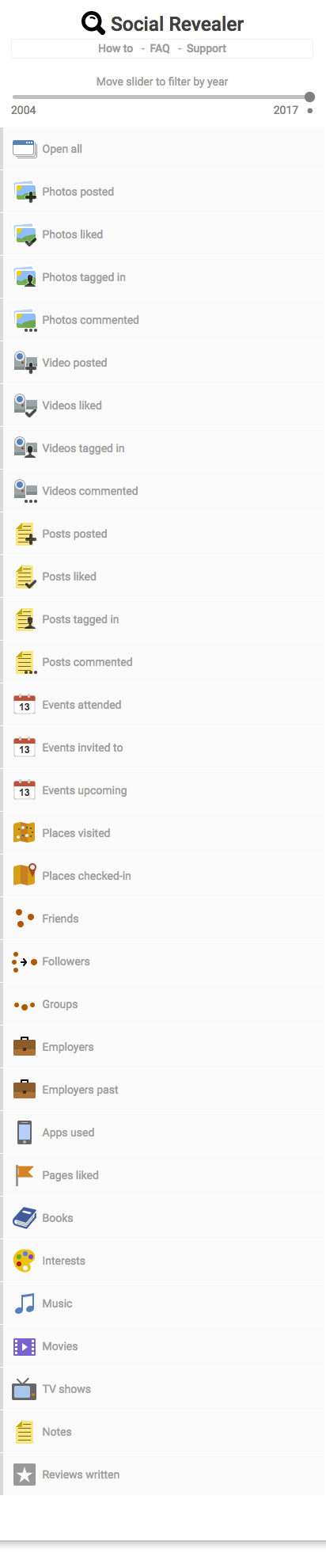
With Social Revealer you'll gain access to hidden parts of Facebook profiles. There's much more than presented on timeline…

🧑🏻‍💻 Developer note

Facebook is gradually switching off its search endpoints Social Revealer depends on. Therefore some users might see "This page isn't available" on some searches. I'm working on a workaround/fix, please be patient.

🚀 Use cases

  • ⭐️ Take control of your profile privacy.
  • ⭐️ Show your share-everything friends what digital footprint they leave behind.
  • ⭐️ Even when somebody has a blank timeline there's still a lot of data that might be seen.

🚀 How does it work?

  • ⭐️ Social Revealer builds up special queries to get access to hidden parts of Facebook.
  • ⭐️ It works on your profile, your friends' profiles or anyone else's profiles.
  • ⭐️ All content you'll see is implicitly shared with you - just not visible.

🚀 Takeaway

  • ⭐️ It's wise to think twice before sharing, liking or commenting anything.

🚀 Features

  • ⭐️ Photos posted, liked
  • ⭐️ Video posted, liked
  • ⭐️ Videos liked
  • ⭐️ Events attended, invited to, in past
  • ⭐️ Places visited, checked-in
  • ⭐️ Friends, followers. groups
  • ⭐️ Employers current, past
  • ⭐️ Pages liked
  • ⭐️ Books, interests, music, movies, TV shows
  • ⭐️ Notes

🚀 Warranty/uncertainty of functionality

  • ⭐️ Social Revealer depends on functionalities of 3rd parties therefore there's no guarantee all features will work the same forever. Some features may be removed, some new ones added. At worst it's also possible all features will stop working.

✍🏻 User reviews

  • This is extension did exactly what it said it would do on the tin. Easily to navigate and use and totally accurate results. Well impressesed.
    — Gary Matthews
You can read more reviews on the reviews page.

📬 Any questions?

If you have any questions, comments, or feedback, feel free to contact me.

Other browser extensions

[debug] Resolved path: 'node_modules' -> '/home/runner/work/app/node_modules' [debug] Path exists: true [debug] Contents: [ 'react', 'lodash', '.bin' ] If you see Path exists: false , you know your working directory is wrong. Add working-directory: ./app to your step. You run a Windows runner and a Linux runner. They share the same cache key. Debug logs reveal:

"total_count": 1, "actions_caches": [ "id": 123456, "key": "Linux-node-abc123", "size_in_bytes": 245000000, "created_at": "2025-04-01T10:00:00Z", "last_accessed_at": "2025-04-02T10:00:00Z" ]

You can query the GitHub API directly.

In this 2,500+ word guide, we will dissect the anatomy of action caching, explore why debugging is necessary, and provide a step-by-step playbook to master debug-action-cache . Before we debug, we must understand the problem. GitHub Actions cache is an immutable blob storage system. You write a cache using actions/cache@v3 or v4 , and later, you attempt to restore it using a key.

[debug] Checking cache for key: Linux-node-abc123 [debug] restoreKeys: [ 'Linux-node-' ] [debug] Cache service URL: https://artifactcache.actions.githubusercontent.com/... [debug] Request headers: Authorization: 'Bearer ***', Accept: 'application/json' [debug] GET response: 404 (Not Found) [debug] Trying restore key: Linux-node- [debug] GET response: 200 OK [debug] Cache found: cacheKey: 'Linux-node-def456', archiveLocation: 'https://...' [debug] Downloading 234MB archive... [debug] Extracting to /home/runner/work/repo/node_modules Suddenly, you see why the wrong cache was restored (because the exact key failed, so it fell back to a prefix). Let's simulate a broken pipeline. You have a monorepo with Python and Node.js. Your Python cache keeps restoring a 3-month-old virtual environment. Step 1: Enable Debug Mode Set ACTIONS_STEP_DEBUG=true . Run the workflow. Step 2: Analyze the Cache Restoration Logic Look for the [debug] restoreKeys line: