1. Standard Tamil Keyboard Layout
High resolution image suitable for printing.
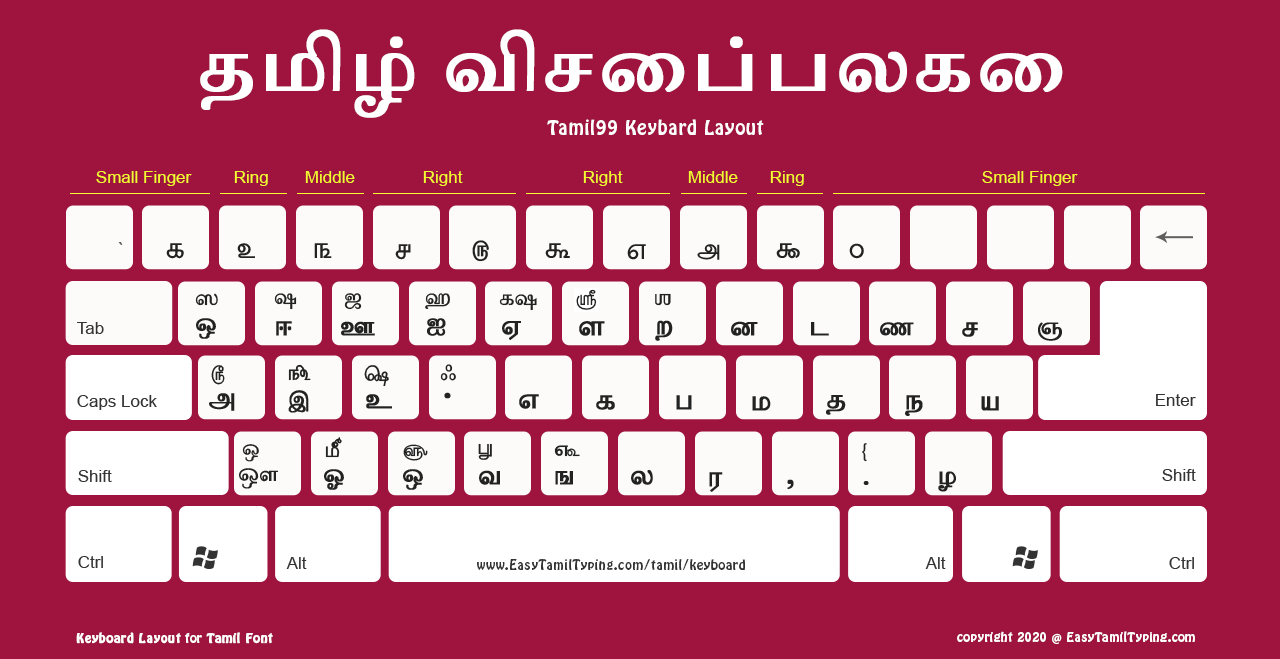
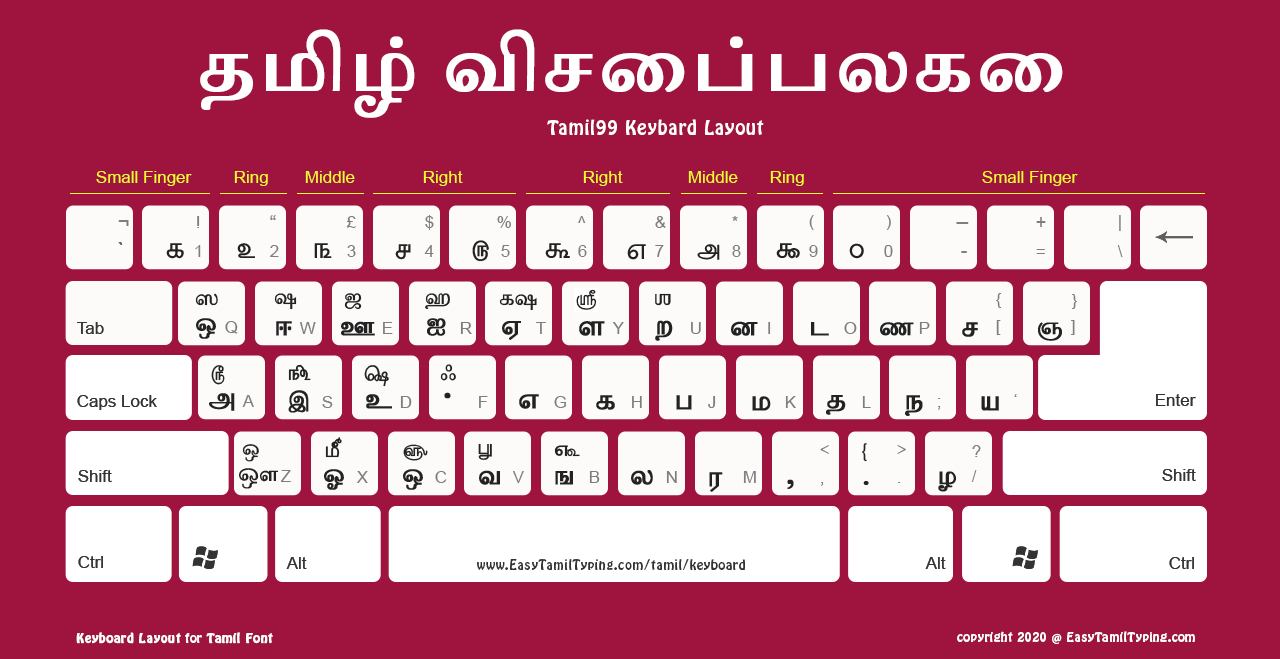
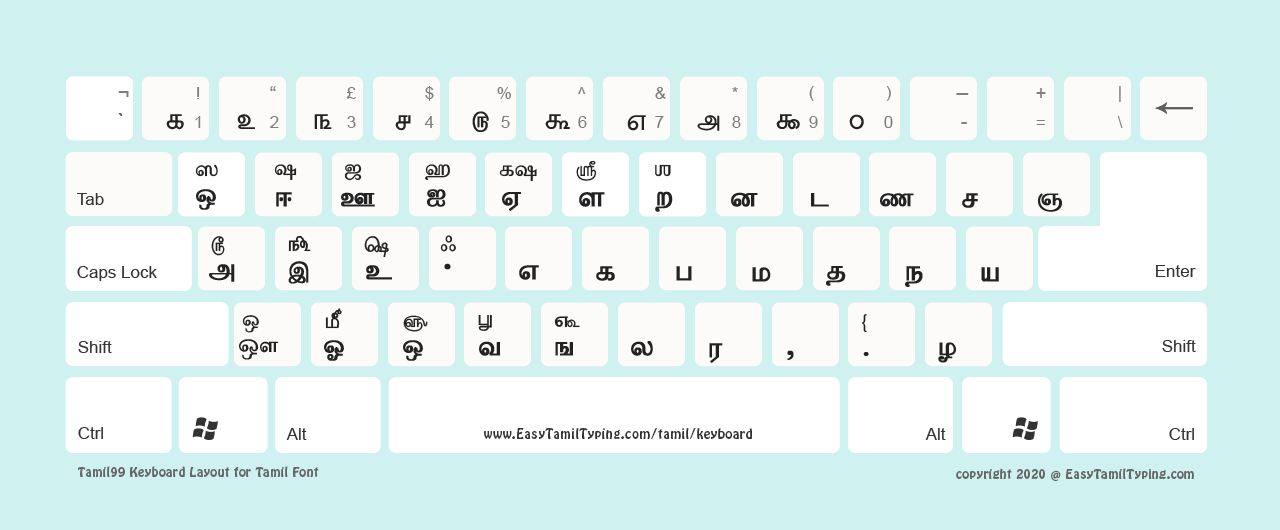
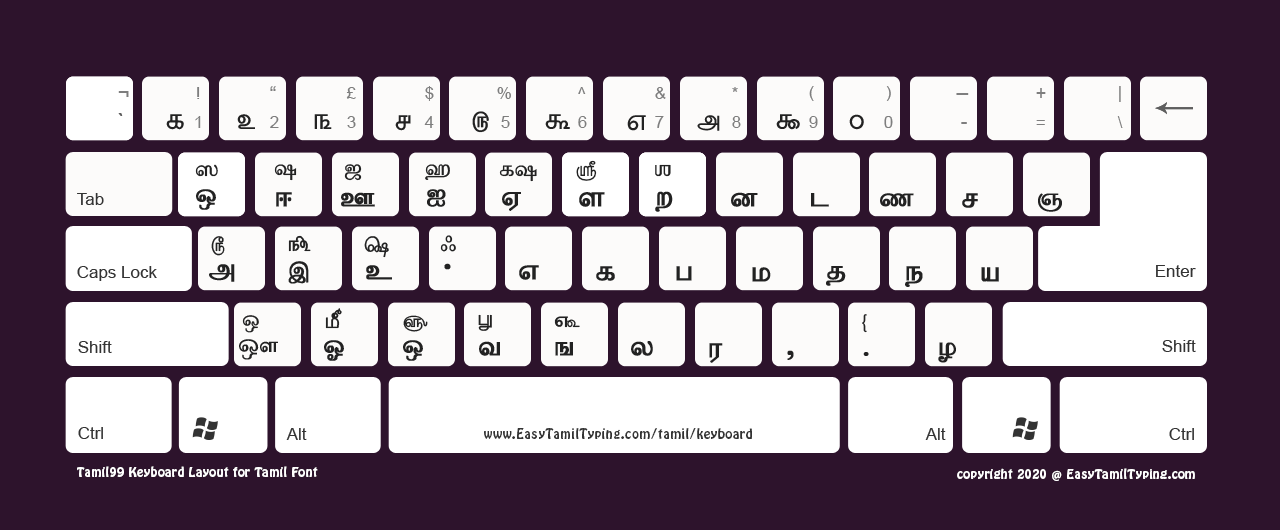
We have five different Tamil keyboard layouts for you to download on your computer. Once downloaded — you can use it as a reference to type in Tamil either on Word document or any other text editor. You also need to download the matching Tamil fonts.
High resolution image suitable for printing.
High resolution image suitable for printing.
High resolution image suitable for printing.
High resolution image suitable for printing.
High resolution image suitable for printing.
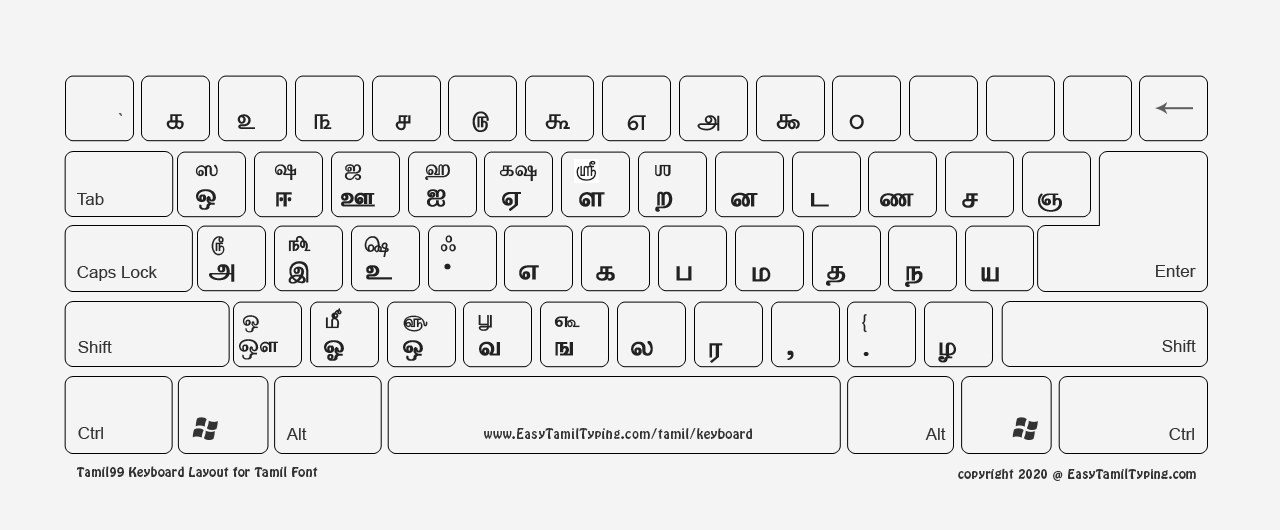
Here's our systematic approach to setting up Tamil typing.
Acquire your Tamil font — browse our curated fonts library and install the ideal typeface for your Tamil writing needs.
Obtain your keyboard reference using this reliable download process:
Click on your preferred keyboard layout from our collection
Right-click when the high-resolution image appears
Choose "Save image as..." and save to your preferred location
Establish your typing environment by opening any word processor and selecting the Tamil font you installed earlier.
Launch your Tamil writing session! Position your keyboard image for easy viewing while you compose beautiful Tamil text.
Expert recommendation: Limited screen space? Our keyboards deliver outstanding print clarity — print one for a reliable desktop reference that's always ready when you need it!
Designed for Tamil99 keyboard layout — accurately mapped to provide an authentic Tamil typing experience with correct character placement.
Meets professional standards — designed for typists, and businesses requiring error-free Tamil documentation.
Supports various display formats — perfect for presentations, reference guides, digital displays, and high-quality printing.
Offers unrestricted licensing — use freely for academic research, commercial projects, educational materials, or personal correspondence.
In spring, the Katawa no Sakura exploded into bloom. The branches, staked and twisted, produced flowers so dense and white that they looked like snow on fire. The samurai, seeing this, wept. He realized that the tree did not bloom despite its injury; it bloomed because of its struggle.
This scene cemented the Katawa no Sakura as a global symbol for disability pride, resilience, and the rejection of eugenicist thinking. In Shinto, the indigenous spirituality of Japan, kami (spirits) reside in extraordinary natural objects. A massive, ancient, symmetrical tree holds a kami . But a Katawa no Sakura is believed to hold a Nigi-mitama —a gentle, healing spirit of adversity.
In botanical terms, these are trees that have suffered extreme environmental stress—lightning strikes, heavy snow breaks, parasitic infections, or severe wind damage—yet continue to bloom. Instead of growing upright and symmetrical, they twist, lean horizontally, or grow out of the cracks of sheer rock faces.
Disgraced and shunned by his lord, the samurai retreated to a remote mountain hermitage. Refusing to perform seppuku (ritual suicide), he chose to live. Every spring, he would crawl to a small, crooked cherry tree near his hut. The tree was ugly by garden standards—split down the middle, missing half its bark, with only two twisted branches reaching east.
In mainstream modern society (especially in the West), "disability" is often viewed as a deficit. The Katawa no Sakura offers a radical counter-perspective: disability as a different mode of existence, not a lesser one. A symmetrical tree grows fast and straight, but it is brittle and falls easily in a storm. A Katawa tree grows slow and crooked, but its roots are deep, and its wood is dense. For international audiences, the term Katawa no Sakura gained unexpected fame through a reinterpretation in the indie visual novel Katawa Shoujo (2009-2012). While the visual novel focuses on girls with physical disabilities at a special school, its title directly subverts the Katawa no Sakura metaphor.
 Sambhu Raj Singh ·