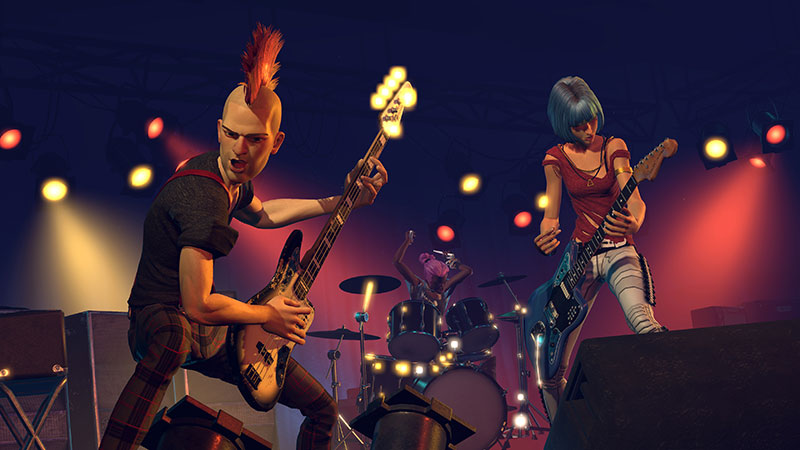
INTRODUCING ROCK BAND RIVALS
the best party game on the planet.
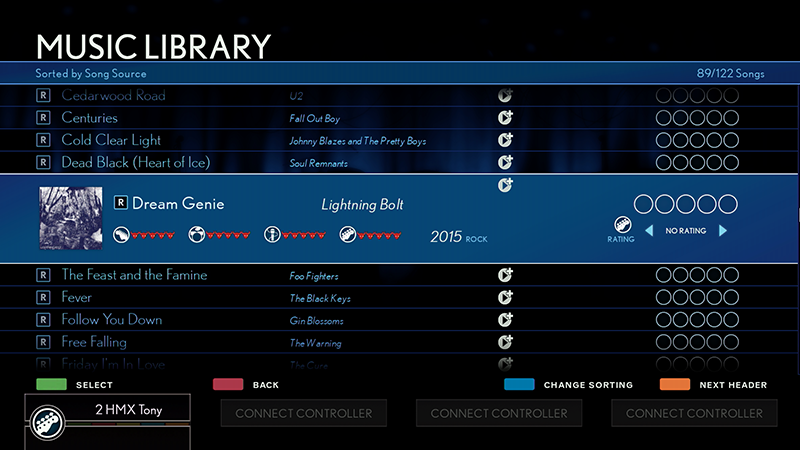
Whether your party is online or in your living room, Rock Band Rivals has you covered. Play with friends in Online Quickplay, or make new ones with our online session browser. Join a Crew to compete in weekly online challenges in Rivals mode, perform your way through a rock documentary about your band in Rockudrama, plus get more than 50 free songs, new rock shop items, and access to future updates.
Raghava Tamil Aunty Big Boobs Milk Suck Avi Link
She represents 70% of the female population. Her lifestyle is defined by walking kilometers for water, collecting firewood, and agricultural labor. She is the backbone of India's economy but invisible in its media. However, rural culture is not static. Thanks to mobile internet (Jio revolution), rural women are learning tailoring via YouTube, accessing government schemes via apps, and forming Self Help Groups (SHGs) that function as mini-banks. The Nari Shakti (woman power) is most authentic here. Part 5: The Winds of Change – Controversies and Progress Education: The Great Equalizer The Beti Bachao, Beti Padhao (Save Daughter, Educate Daughter) scheme has shifted the needle. Indian families are now investing in girls' higher education, though son preference still skews sex ratios in states like Haryana. The lifestyle of a girl child is no longer just waiting for marriage; she is preparing for the IIT-JEE or UPSC exams. Love, Marriage, and the Civil Code The culture of arranged marriage (using matrimonial sites like Shaadi.com) is being disrupted by love marriages and court marriages . The lifestyle is becoming globalized—live-in relationships, though legally fuzzy, are accepted in metros. Yet, the shadow of dowry and domestic violence persists. The modern Indian woman carries a pepper spray in her bag not for fashion, but for safety. The #MeToo movement finally arrived in India, albeit late, shaking the Bollywood and corporate corridors. Conclusion: The Future is Feminine (and Hybrid) The Indian woman’s lifestyle is not a line of progression from "traditional" to "modern." It is a spiral. She picks the mangalsutra (sacred necklace) for the wedding, but removes it for the gym. She fasts for her son’s health but teaches her daughter to fight for her rights.
She likely has a Master’s degree. She lives alone in a PG (paying guest) accommodation. She uses dating apps (discreetly), orders food via Swiggy, and invests in the stock market. Her culture is defined by autonomy . She may reject marriage altogether (a growing single by choice movement). However, she battles loneliness and the political backlash of "Westernization." raghava tamil aunty big boobs milk suck avi
Introduction: The Land of the Dual Avatars She represents 70% of the female population
Today, the tide is turning. Urban women are speaking openly about burnout, post-partum depression, and marital stress. Mental health apps and online therapy are booming, though it remains a taboo in smaller towns. The keyword here is Swaasthya (holistic health) – not just absence of disease, but emotional freedom. No article on Indian women is complete without this binary. However, rural culture is not static
The culture of Indian women is defined by —and doing so with a bindi on her forehead and a smartphone in her palm. As India becomes the world’s most populous nation, the agency of its women will decide the country’s economic and moral future.
Yet, the hierarchy is flattening. The bahu (daughter-in-law) who once entered the household with a ghoonghat (veil) is now often the primary breadwinner. This economic power is redefining respect. Modern Indian women use technology to maintain family bonds—sharing aarti timings via WhatsApp or ordering groceries for aging parents through apps. Ask any Indian woman about her stress levels, and she will point to October–November (Diwali season). Women are the custodians of festivals. They perform Karva Chauth (fasting for the husband’s longevity) and Teej , but also lead the worship of Durga (the goddess of power) during Navratri.
To understand the lifestyle and culture of Indian women is to navigate a river with two powerful currents. One current is ancient, flowing from the Vedas, the joint family system, and agrarian traditions. The other is modern, roaring with corporate ambition, digital connectivity, and global feminism. Indian women today do not simply live in India; they negotiate between these two worlds daily.