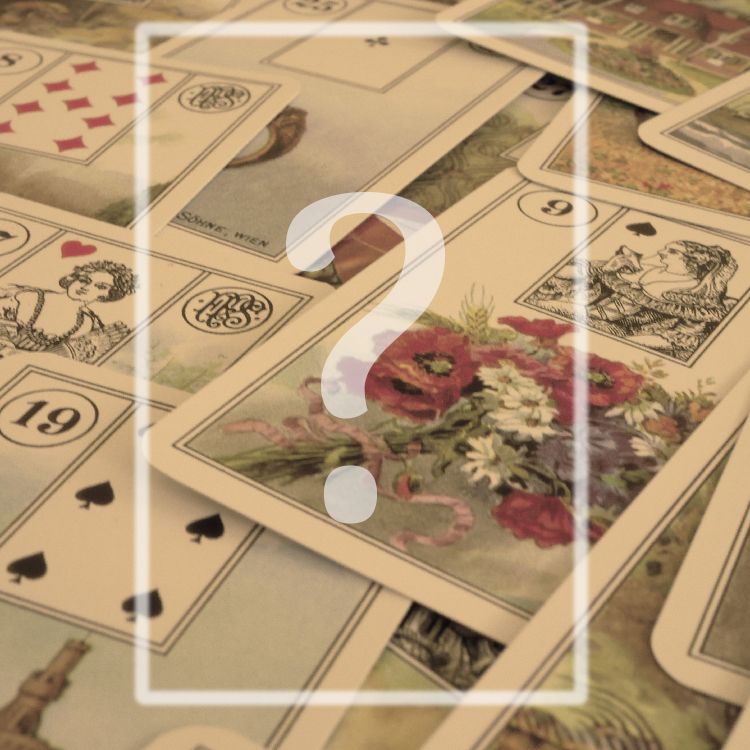
The Petit Lenormand is probably the most fascinating fortune-telling deck inherited from the 19th century. Inspired by the famous Mademoiselle Lenormand, this 36-card deck is known for its amazing ability to predict the future in a concrete and direct way. While other oracles can be vague, the Lenormand gives honest answers to daily life questions (love, work, money).
At first, it is tempting to see the Lenormand as a simpler system than the Tarot. With only 36 cards using clear symbols (a Dog, a Tree, a Key...), it seems easier to learn than the 78 complex cards of the Tarot. However, this simple look hides a clever mechanic.
To master this deck, learning keywords by heart is not enough. The real power of the Petit Lenormand lies in its unique grammar:
Download the PDF eBook version (80 pages) of this complete guide for free. Included: the 36 classic cards + the 8 bonus cards from the Gilded Reverie + thematic interpretations.
This guide was created to save you time. You will find below the full meaning of the 36 cards. For each card, I first give you the classic and traditional view (to have solid basics), followed by my modern interpretation from my personal practice, to help your readings flow better.
In traditional Indian society, the family is considered the most important social unit. The joint family system, prevalent in rural and urban areas alike, is a defining feature of Indian family life. Multiple generations live together under one roof, sharing joys and sorrows, and pooling their resources to create a harmonious and interdependent household. The elderly members of the family are revered for their wisdom, experience, and guidance, while the younger members are expected to show respect, obedience, and deference to their seniors.
India, a land of diverse cultures, traditions, and values, is home to a unique and vibrant family lifestyle that is woven into the fabric of its daily life. The Indian family, a cornerstone of the country's social structure, is a dynamic and ever-evolving entity that reflects the nation's rich heritage and its people's adaptability to changing times. In this article, we will embark on a journey to explore the intricacies of Indian family lifestyle and daily life stories, delving into the triumphs, challenges, and experiences that shape the lives of millions of Indians.
The Indian family lifestyle is a vibrant and dynamic entity that reflects the country's rich cultural heritage and its people's adaptability to changing times. While Indian families face a range of challenges, they also possess a unique set of strengths that have allowed them to thrive. As India continues to evolve and grow, its family lifestyle will undoubtedly continue to change, but the core values of respect, responsibility, and resilience will remain an integral part of its fabric. By exploring the intricacies of Indian family lifestyle and daily life stories, we gain a deeper understanding of the triumphs, challenges, and experiences that shape the lives of millions of Indians, and we are reminded of the importance of family, community, and tradition in our lives.
In a typical Indian family, the morning begins early, with the elderly members waking up to perform their daily puja (prayer) and yoga, while the younger members get ready for school or work. The household chores are divided among family members, with the women often taking on a significant share of the responsibilities, including cooking, cleaning, and childcare. The family comes together for meals, which are often elaborate and feature a variety of traditional dishes.
Young Indians, in particular, are driving this change, with many opting for careers and education abroad, or pursuing their passions and interests in cities like Mumbai, Delhi, and Bengaluru. While this has led to greater autonomy and self-expression, it has also created new challenges, such as the erosion of traditional values, increased stress, and a sense of disconnection from one's roots.
As India modernizes and urbanizes, the traditional family structure is undergoing significant changes. Nuclear families are becoming more common, especially in cities, where the demands of modern life and the need for individual freedom are redefining family dynamics. The influence of Western culture, exposure to global media, and the growing importance of individualism are contributing to a shift away from traditional values and towards a more liberal and permissive lifestyle.
The simplicity of the Lenormand cards can be deceptive. Following the classical interpretation of the cards, I think that beginners should still do some real learning of the Lenormand system to produce solid and consistent readings.
I hope that with the personal elements I propose for each of the cards, this progression will be facilitated. Feel free to comment and share your own vision of the cards.
Each card in the (Petit) Lenormand is a universe of symbols and meanings that intertwine with our own stories. Your personal interpretation enriches the fabric of our collective understanding. Which card resonates the most with you? Do you have a story or a personal interpretation that could shed new light on the mysteries of the (Petit) Lenormand?
I invite you to share your discoveries and stories in the comments below. Your contribution is valuable and can become a beacon for someone else on their path of discovery.
In traditional Indian society, the family is considered the most important social unit. The joint family system, prevalent in rural and urban areas alike, is a defining feature of Indian family life. Multiple generations live together under one roof, sharing joys and sorrows, and pooling their resources to create a harmonious and interdependent household. The elderly members of the family are revered for their wisdom, experience, and guidance, while the younger members are expected to show respect, obedience, and deference to their seniors.
India, a land of diverse cultures, traditions, and values, is home to a unique and vibrant family lifestyle that is woven into the fabric of its daily life. The Indian family, a cornerstone of the country's social structure, is a dynamic and ever-evolving entity that reflects the nation's rich heritage and its people's adaptability to changing times. In this article, we will embark on a journey to explore the intricacies of Indian family lifestyle and daily life stories, delving into the triumphs, challenges, and experiences that shape the lives of millions of Indians. Savita Bhabhi Hindi.pdf
The Indian family lifestyle is a vibrant and dynamic entity that reflects the country's rich cultural heritage and its people's adaptability to changing times. While Indian families face a range of challenges, they also possess a unique set of strengths that have allowed them to thrive. As India continues to evolve and grow, its family lifestyle will undoubtedly continue to change, but the core values of respect, responsibility, and resilience will remain an integral part of its fabric. By exploring the intricacies of Indian family lifestyle and daily life stories, we gain a deeper understanding of the triumphs, challenges, and experiences that shape the lives of millions of Indians, and we are reminded of the importance of family, community, and tradition in our lives. In traditional Indian society, the family is considered
In a typical Indian family, the morning begins early, with the elderly members waking up to perform their daily puja (prayer) and yoga, while the younger members get ready for school or work. The household chores are divided among family members, with the women often taking on a significant share of the responsibilities, including cooking, cleaning, and childcare. The family comes together for meals, which are often elaborate and feature a variety of traditional dishes. The elderly members of the family are revered
Young Indians, in particular, are driving this change, with many opting for careers and education abroad, or pursuing their passions and interests in cities like Mumbai, Delhi, and Bengaluru. While this has led to greater autonomy and self-expression, it has also created new challenges, such as the erosion of traditional values, increased stress, and a sense of disconnection from one's roots.
As India modernizes and urbanizes, the traditional family structure is undergoing significant changes. Nuclear families are becoming more common, especially in cities, where the demands of modern life and the need for individual freedom are redefining family dynamics. The influence of Western culture, exposure to global media, and the growing importance of individualism are contributing to a shift away from traditional values and towards a more liberal and permissive lifestyle.
Copyright © www.tarotquest.co